


KEY INTELLIGENCE:
For the first time in 20 years, no heavy military hardware was displayed in Moscow’s Red Square.
The Kremlin, under President Vladimir Putin, restricted access to international media while implementing city-wide mobile internet outages.
The display suggests a military force focused on maintaining a domestic information narrative rather than showcasing operational reserves.
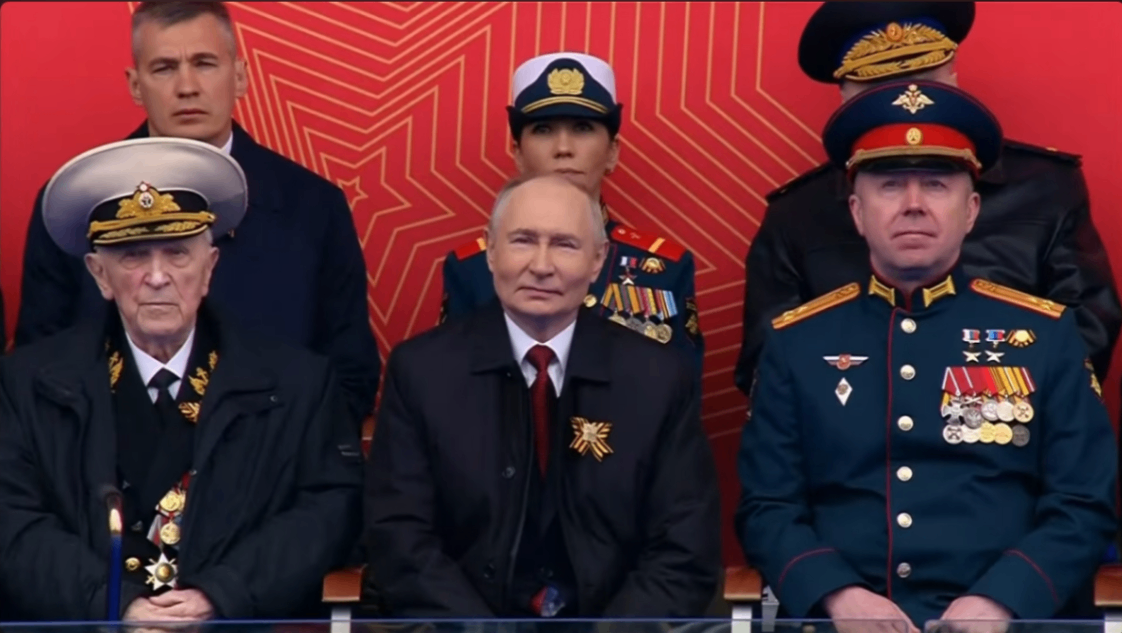
MOSCOW — The rhythmic thud of boots replaced the roar of tanks on Red Square this Saturday. In a pared-back Victory Day parade, President Vladimir Putin presided over a ceremony devoid of the heavy armor that has defined the event for two decades. The shift comes as Russia attempts to bridge the gap between the historic memory of World War II and the reality of the ongoing war in Ukraine.
"The great feat of the victorious generation inspires the soldiers carrying out tasks of the special military operation today," Putin stated, framing the current conflict as a defensive stand against the NATO bloc.
The "Digital" Pivot : In a move that underscores the thinning of available hardware, the Kremlin bypassed the traditional display of tanks and missile batteries. Instead, it broadcast a pre-produced, high-definition video of front-line operations across screens in Red Square and throughout state media channels. This transition from physical exhibition to managed broadcast serves as a tactical shift in information control, shielding the public from evidence of combat losses while reinforcing the state’s preferred narrative.
The Invisible Security State : The spectacle was accompanied by a tightening of internal controls. As of Friday, Moscow’s largest telecoms operators signaled that citizens would face deliberate disruptions to mobile internet and text messaging services.
"Mool post could not immediately reach the Kremlin’s press office for comment" regarding whether these communication blackouts will become a permanent feature of state-sanctioned celebrations. The move comes as the Kremlin faces intensified drone and missile strikes deep within Russian borders, creating a security environment where external threats are met with internal information isolation.
Structural Realities : The parade functioned as a stage for strategic alignment, attended by leaders from Belarus, Malaysia, Kazakhstan, and Uzbekistan. Behind the optics of international support, the structural reality remains a 1,000-for-1,000 prisoner exchange—a stark indicator of the high-stakes negotiations facilitated by the temporary three-day ceasefire brokered by the US and regional actors.
As the war in Ukraine enters a phase of uneasy, temporary stillness, the emptiness of Red Square speaks louder than the rehearsed lines of the marchers. The Russian state is no longer showing the world what it has; it is showing the world what it wants the public to see.
Discussion