


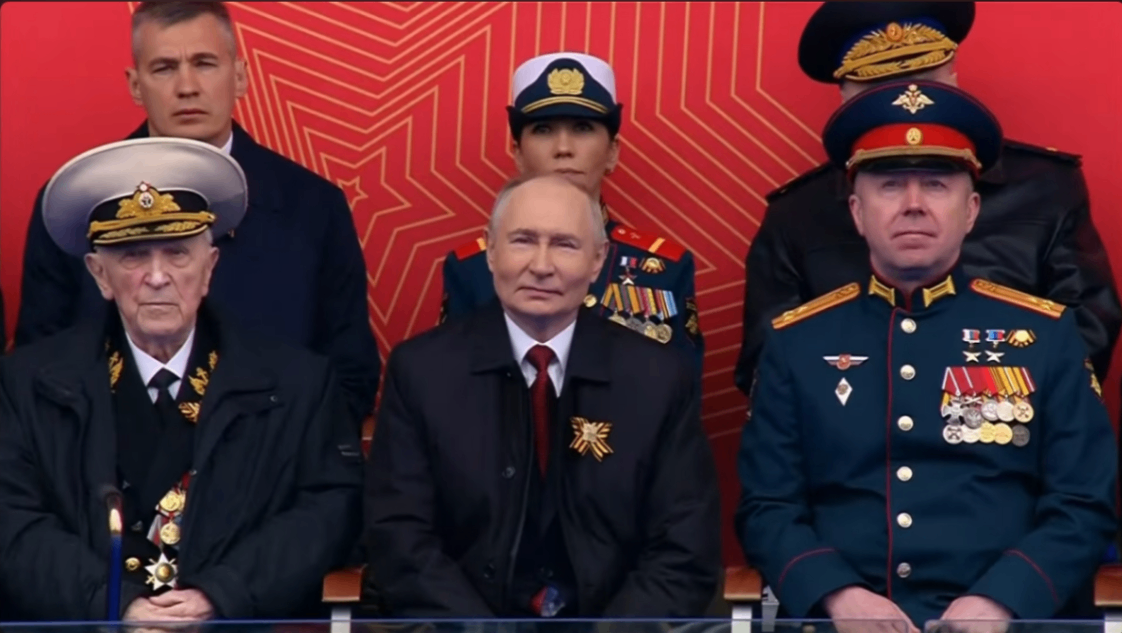
Saturday’s Victory Day parade in Moscow lacked the heavy military hardware that has defined the event for two decades. The Kremlin focused on digital broadcasts and mobile signal blocks instead, signaling a shift in how the state manages its public image.
President Vladimir Putin led the ceremony. He framed the ongoing war in Ukraine as a defensive stand against NATO, telling the crowd that the "victorious generation" inspires soldiers today.
The Kremlin made a notable change to the event. Instead of showing tanks or missile batteries, the state broadcast pre-produced videos of front-line operations on large screens. Analysts suggest this move keeps the public from seeing evidence of combat losses. The parade also featured leaders from Belarus, Malaysia, Kazakhstan, and Uzbekistan, providing a thin veil of international support amid the high-stakes negotiations of the current three-day ceasefire.
The event took place under tight control. As of Friday, major mobile operators in Moscow cut off internet and text messaging services. The city remained in an information blackout throughout the weekend.
The parade now mirrors the state’s internal security concerns. With drones and missiles hitting deep inside Russia, the government has chosen to prioritize control over physical displays. The empty space in Red Square shows a clear change: Russia is no longer showing the world what it has, but what it wants the public to believe.
Discussion