

For three decades, the global technology services industry—anchored by Indian giants like TCS, Infosys, and Wipro—operated on a singular, powerful formula: "Scale + Complexity + Cost." By providing massive pools of technical talent at high speeds and lower costs, India became the world’s back office.
But the formula is breaking.
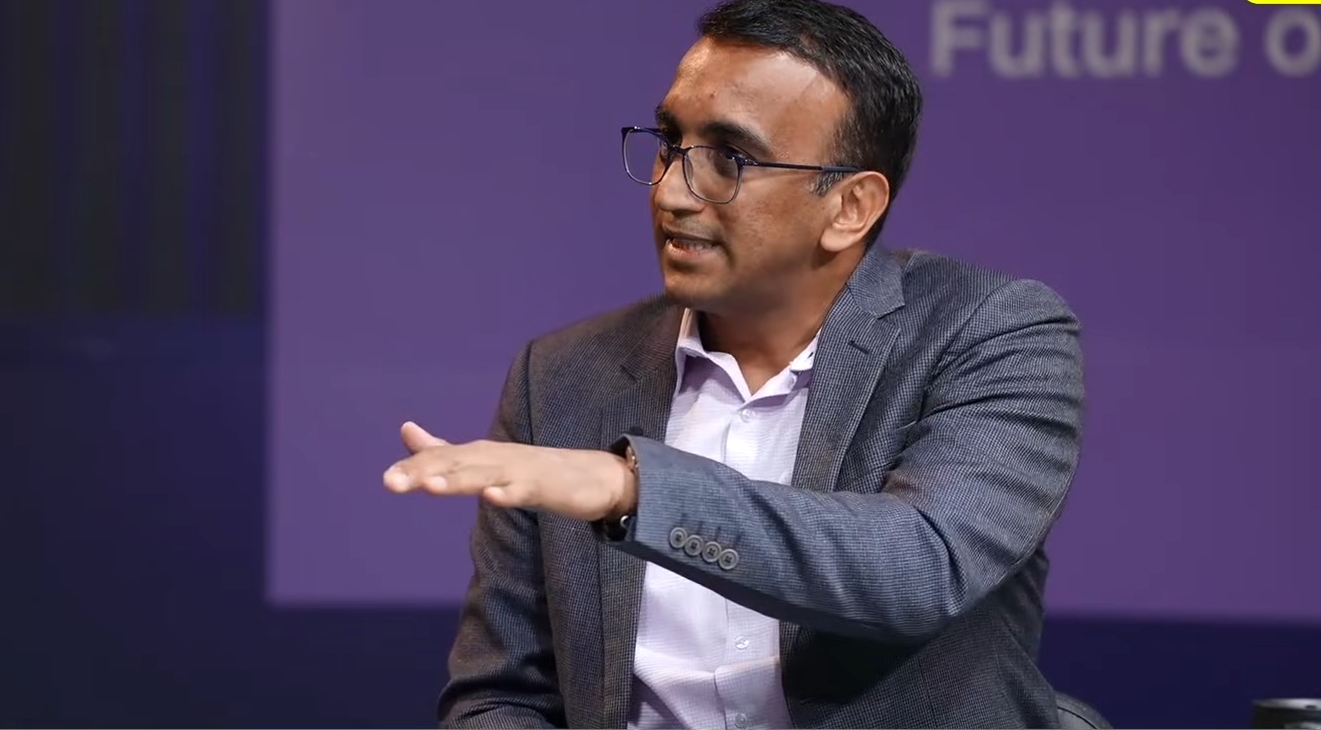
In a recent, wide-ranging interview on Front Page, Praveen Bhadada, CEO and Managing Director of Neoway Global, laid out a stark reality: we are no longer in a cyclical slowdown. We are witnessing a fundamental, structural reset of the $280 billion Indian IT sector.
"This is not something we have seen with the same intensity in the last 40 years," Bhadada notes. "We are moving into the third phase of tech services: the Outcome Era."
The Three Phases of Evolution
To understand where the industry is going, Bhadada maps out where it has been:
Labor as a Service: The 1990s and 2000s were about the "cheapest labor possible" executing basic tasks.
Platform-Led Services: The 2010s saw the rise of specialists in ecosystems like Salesforce, Microsoft, and SAP.
Services for Outcomes: The current AI-driven wave, where clients no longer care about headcount or platforms—they only care about tangible business results.
The Problem of 'Fogginess'
The biggest challenge for IT firms today isn't just the technology; it's the "fogginess" of their clients. "Enterprises are clueless in terms of how they should define future resilience," says Bhadada. In the past, a client provided a vision, and the IT firm executed it. Today, the client doesn't know what their company should look like in five years.
This shift demands a new DNA from IT providers. They can no longer just be "order takers"; they must be "co-creators." This requires high-level consulting capabilities that many traditional IT firms lack at scale.
The Barbell Effect: Winners and Losers
Bhadada predicts the industry will settle into a "barbell" structure over the next three years:
The Giants (Tier 1): Firms like Accenture and Infosys are struggling with the transition but have the capital, customer access, and programmatic shifts in place to eventually "figure it out."
The AI-Native Boutique Firms: Small, agile, and "re-founded" companies that aren't weighed down by legacy infrastructure or public market quarterly pressures.
The Squeezed Middle: Mid-tier firms that lack the massive scale of the giants and the specialized agility of the boutiques are at the highest risk of obsolescence unless they radically pivot.
The Death of the Billable Hour
Perhaps the most controversial take is the timeline for the end of the traditional business model. "In the long term—I’d say another three years—the concept of the billable hour will be gone," Bhadada asserts.
While currently sustained by old contracts and a lack of infrastructure readiness, the model is under siege. AI is compressing headcount requirements by an estimated 30-35%. However, Bhadada remains an optimist: "If you use AI to increase quality and quantity—doing projects that were previously unimaginable—the industry can be a net beneficiary."
New Value Pools: Where is the Money?
For firms looking to survive, Bhadada identifies three critical areas:
Verticalized AI Solutions: Moving beyond generic tech to solving hyper-specific problems in sectors like SMB manufacturing.
Modernization: Helping the "unready" boards move their legacy data and platforms into an AI-ready state.
AI Governance: As companies worry about "hallucinations" and security, firms that can audit and govern AI outputs will command massive premiums.
Advice for the Next Generation
To the young professionals entering this volatile market, the message is clear: Pedigree is losing its punch.
"The pedigree beyond a point will not even matter—IIT vs. a Tier 3 college," Bhadada says. "Demo-cratization of access to AI means the only limit is creativity and ideas. We might not even need to wait until age 21 to start professional tech careers."
The Bottom Line
The Indian IT industry is not just "re-imagining" itself; it is "re-founding." The firms that thrive will be those that move from scaling people to scaling intelligence. As Bhadada puts it, the need of the hour is "asymmetric thinking"—the kind of bold, long-term betting that founders do best.
The era of selling hours is ending. The era of selling outcomes has begun.
Discussion