

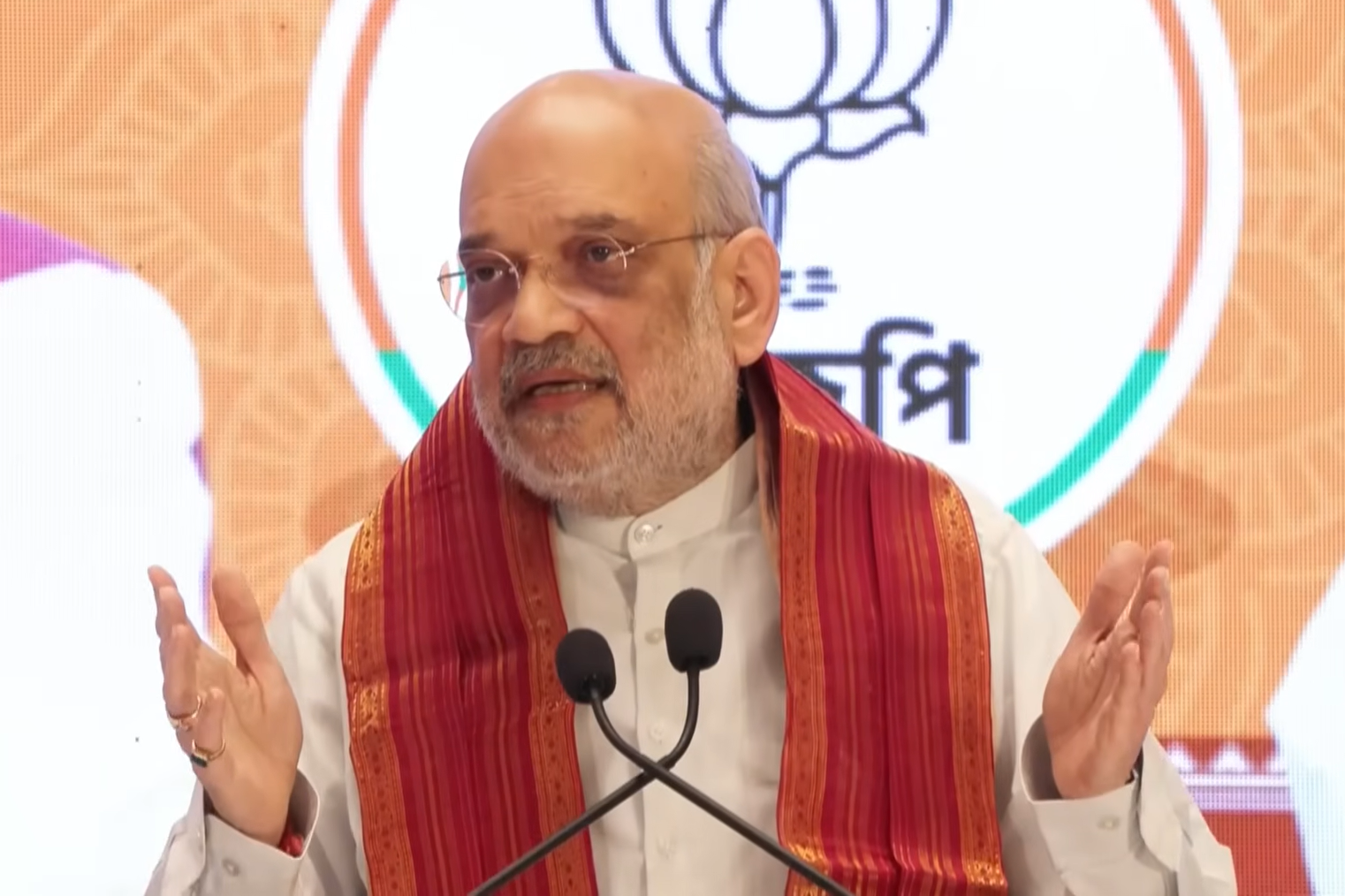
The Union Home Minister’s Kolkata address marks a shift from event-based criticism to a systemic audit of West Bengal’s governance. Linking industrial flight to 'cut money' and demographic shifts to illegal infiltration, Shah proposes a forensic overhaul of recruitment and security, citing Assam’s peace model as the BJP’s proof.
The digital and physical infrastructure of West Bengal, once the industrial heartbeat of India, has been hollowed out by a systemic mechanism of "cut money" and "syndicates." Union Home Minister Amit Shah, during an extensive press briefing in Kolkata, asserted that this decline was not an accidental byproduct of policy but a deliberate outcome of a governance model that prioritizes political cadre over professional bureaucracy. This systemic rot has forced major industries to flee the state, effectively exporting Bengal's economic potential to other parts of the country.
Those departing industries have left a vacuum now being filled by what Shah identifies as a deliberate blurring of demographic lines. He accused the ruling Trinamool Congress (TMC) of skillfully attempting to eliminate the distinction between original Bengali-speaking residents and illegal Bangladeshi infiltrators for electoral gain. This demographic engineering, Shah argued, is protected by an administrative layer that has transitioned from neutral civil service to political cadre, necessitating the recent interventions by the Election Commission to reshuffle IAS and IPS officers.
The reshuffling of officers serves as a temporary check on a much deeper crisis in the state’s internal security and rule of law. Shah pointed to the post-2021 election violence and the targeting of political workers as evidence of a state-sponsored breakdown in law and order. He contrastingly offered the "Assam Model," where over 10,900 youth surrendered their arms to join the mainstream, as a benchmark for how the BJP intends to stabilize volatile regions like North Bengal through a dedicated "special chapter" in their manifesto focusing on health and infrastructure.
Infrastructure development in the north is coupled with a promise to repair the broken aspirations of the state’s youth in the south. Addressing the Multi-Crore SSC recruitment scam, Shah committed to a transparent, automated hiring process and a specific five-year age relaxation for candidates who lost their eligibility due to the years of litigation and stalled processes under the current administration. This reprieve aims to restore faith in a system where jobs were allegedly sold rather than earned.
Restoring that faith requires a fundamental return to the "culture of courtesy" that Shah claims the TMC has dismantled through its public confrontations with constitutional heads. He characterized the perceived disrespect toward the President of India and the Prime Minister during disaster visits as a departure from Bengal’s historical values of tolerance and intellectual priority. By framing the upcoming polls as a choice between this "culture of intolerance" and a return to "Vikas" (Development), the Home Minister positioned the BJP not just as a political alternative, but as a restoration project for Bengal’s lost global authority.
Discussion