


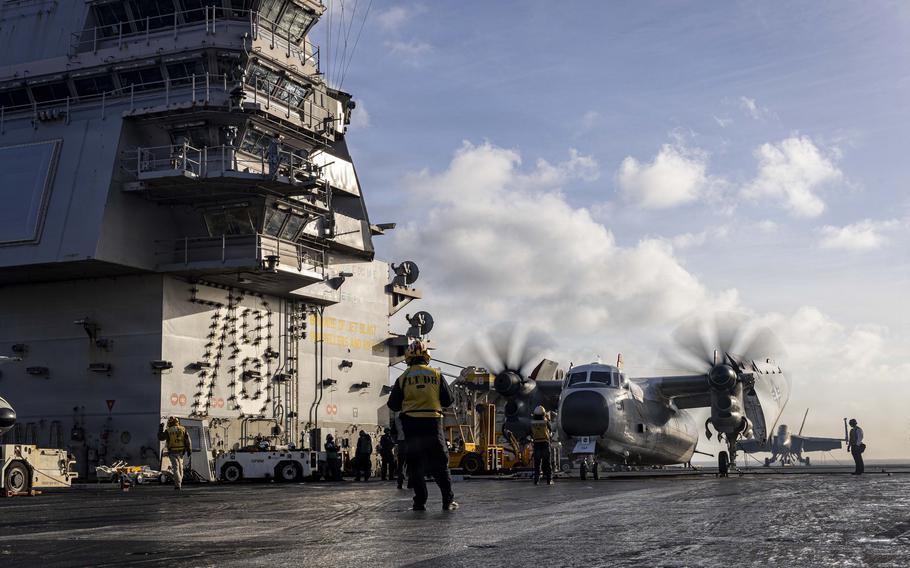
The USS Gerald R. Ford transited the Strait of Gibraltar on Wednesday, ending a record-breaking 316-day deployment that spanned three continents. This move reduces the U.S. naval footprint in the Middle East following a fragile ceasefire. Verified satellite data confirms the carrier is now westbound toward its home port in Virginia.
The United States Navy’s newest nuclear supercarrier, the USS Gerald R. Ford, entered the Atlantic Ocean on May 6 after nearly eleven months at sea. This departure marks the end of the longest carrier deployment since the Vietnam War, surpassing previous records set during the Cold War era.
This historic duration was necessitated by a series of high-stakes geopolitical shifts that pulled the vessel across multiple theaters of operation. Originally deployed to Northern Europe in June 2025, the carrier was abruptly redirected to the Caribbean in October to enforce a blockade against Venezuela and support the capture of Nicolás Maduro in early 2026.
The successful capture of the Venezuelan leader did not signal the end of the mission, as the ship was immediately ordered to the Red Sea to lead Operation Epic Fury. During this phase, the vessel faced significant internal strain, including a major laundry room fire in March 2026 that required emergency repairs in Croatia and displaced hundreds of sailors.
These mechanical and human endurance challenges are now being addressed as the ship returns to Naval Station Norfolk for an expected late-May arrival. While the Ford departs, the U.S. maintains a significant regional presence with the USS Abraham Lincoln and USS George H.W. Bush remaining on station to monitor the current Iranian ceasefire.
Discussion